

Can a Chiropractor Help a Herniated Disc? What You Should Know
Key Takeaways
- Chiropractic treatment won’t physically push a herniated disc back into place. The focus is managing symptoms and improving function.
- Whether chiropractic treatment is appropriate depends on the location of the herniation, your symptoms, and neurological findings.
- Incorrectly applied techniques without proper evaluation could potentially worsen symptoms; prioritize careful assessment.
- Progressive weakness, loss of bowel/bladder control, or rapidly worsening neurological symptoms require immediate medical evaluation.
In many cases, a chiropractor can help a herniated disc. Chiropractic treatment helps reduce inflammation around sensitive nerves and helps your body heal naturally, but it doesn’t physically “push” a disc back into place.
Whether treatment is appropriate depends on where the herniation is located, what symptoms are present, and what an examination reveals. Common symptoms that bring patients to our Bellmore office include sharp back or neck pain, burning discomfort that radiates into an arm or leg, numbness, tingling, or weakness.
Below, we’ll cover what a herniated disc is and the proper approaches that can be used to treat specific symptoms. Learn how conservative care can ease your discomfort, safety considerations, and what to expect during an evaluation.
What Is a Herniated Disc?
Your spine consists of vertebrae that have flexible pads called intervertebral discs that act as a cushion between each bone. These discs have a tough, fibrous outer layer and a soft, gel-like center.
When the outer ring of a disc weakens or gets torn, it allows some of the inner gel material to push outward. If that material gets pressed against or irritates adjacent spinal nerve roots, it can trigger radiating pain, tingling, or weakness.
Herniations most frequently develop in the lumbar spine (lower back) or cervical spine (neck). Some people experience intense pain from a minor bulge, but others have significant herniations that are visible on imaging, with few or no symptoms.
Can a Chiropractor Fix a Herniated Disc?
A chiropractor cannot manually push or physically force a herniated disc back into its original position. Chiropractic care focuses on improving joint mechanics, which helps relieve mechanical stress around the affected area.
Many patients with a herniated disc successfully manage their condition through conservative, non-invasive treatment. With proper care, inflammation is reduced, and functional movement is restored.
It’s important to note that this treatment approach can help reduce pain symptoms, relieve pressure, and irritation around the nerve. However, it doesn’t mean the disc was physically repositioned or healed.
Can a Chiropractor Help a Herniated Disc?
While chiropractic care does not structurally undo a disc herniation, it can significantly help you manage the painful symptoms and physical limitations associated with one.
Chiropractic treatment can relieve contributing symptoms such as restricted movement in nearby spinal joints and treat the painful defensive contraction of surrounding muscles, a reaction known as muscle guarding. Conservative chiropractic care addresses these secondary issues by improving joint mobility, relieving muscular tension, and restoring cleaner movement patterns.
By reducing joint restriction and relaxing tight tissues, overall mechanical stress on the sensitive area drops. This approach also incorporates targeted movement strategies, rehabilitative exercises, and activity guidance to help you safely maintain daily routines while the inflamed tissue heals. Rather than applying a standard adjustment to every patient with a disc diagnosis, care must always be tailored to your specific examination findings.
What Does a Chiropractor Do for a Herniated Disc?
At Brenner Chiropractic, care for a suspected or diagnosed herniated disc is structured step by step based on your physical presentation.
Consultation and Symptom Evaluation
Care begins with a detailed consultation and physical exam. Dr. Brenner evaluates:
- When your pain started, and what daily movements aggravate or ease it
- Where pain radiates, along with any numbness, tingling, or muscle weakness
- Your health history, prior injuries, and any previous imaging
- Specific orthopedic and neurological indicators (such as reflexes, sensation, and muscle strength)
While advanced diagnostic imaging, such as an MRI, is not automatically required before starting conservative care, we will recommend imaging if your examination reveals concerning neurological signs or if your symptoms fail to improve as expected.
Selecting the Appropriate Chiropractic Technique
At Brenner Chiropractic, we do not treat symptoms using a one-size-fits-all approach. For disc-related conditions, we select gentle, low-force techniques tailored to your comfort and pain tolerance.
We apply specialized care options, like flexion-distraction therapy, which uses a gentle, rhythmic traction table to decompress the spine. Using these techniques, we increase the intervertebral space and reduce pressure on irritated nerve roots without forceful twisting.
Address Movement and Supporting Muscles
Our treatment approach also addresses the surrounding soft tissue to help improve your overall movement. Our team incorporates targeted therapies, such as trigger point therapy, Instrument-Assisted Soft-Tissue Mobilization (IASTM), and fascial release technique, which help improve local blood flow and restore flexibility.
Monitor the Patient’s Response
Recovery from a disc injury requires ongoing observation. Dr. Brenner checks your progress at every visit, evaluating changes in mobility, pain intensity, and radiating nerve symptoms. Tracking these subtle shifts ensures treatment remains safe and effective.
Can a Chiropractor Make a Herniated Disc Worse?
It is completely reasonable to wonder about safety when you are already dealing with disc pain. Following a manual therapy session, experiencing mild, temporary soreness or aching in the treated muscles is normal, similar to starting a new exercise routine. However, if a forceful or inappropriate technique is applied to an acutely inflamed, unstable disc, it could potentially aggravate nerve irritation and worsen your symptoms.
Dr. Brenner emphasizes thorough initial screening to ensure the safety of every patient. We select gentle techniques during each session while paying attention to how you feel and respond to the treatment. If your symptoms don’t improve or if you show signs of worsening, care is immediately paused and reassessed. Dr. Brenner may recommend diagnostic imaging or specialist medical consultation if an underlying condition is suspected.
When Should a Herniated Disc Be Evaluated by a Medical Doctor?
While conservative chiropractic care helps many disc conditions, certain severe neurological symptoms require prompt medical or emergency assessment. You should seek immediate medical attention if you experience:
- Progressive, severe, or sudden muscle weakness (such as foot drop or difficulty holding objects)
- “Saddle anesthesia” (numbness in the groin, buttocks, or inner thighs)
- Sudden difficulty with balance, walking, or physical coordination
- Severe nerve pain following high-impact physical trauma, such as a car accident or fall
- Sudden loss of bowel or bladder control
Chiropractic and medical care are not mutually exclusive. When red flags appear, co-management or a direct referral to a neurologist, orthopedic specialist, or spine surgeon is the safest, most appropriate decision.
What to Expect When Seeing a Chiropractor for a Herniated Disc
Visiting our Bellmore practice for suspected disc pain is designed to be an unhurried, thorough experience focused on finding clear answers:
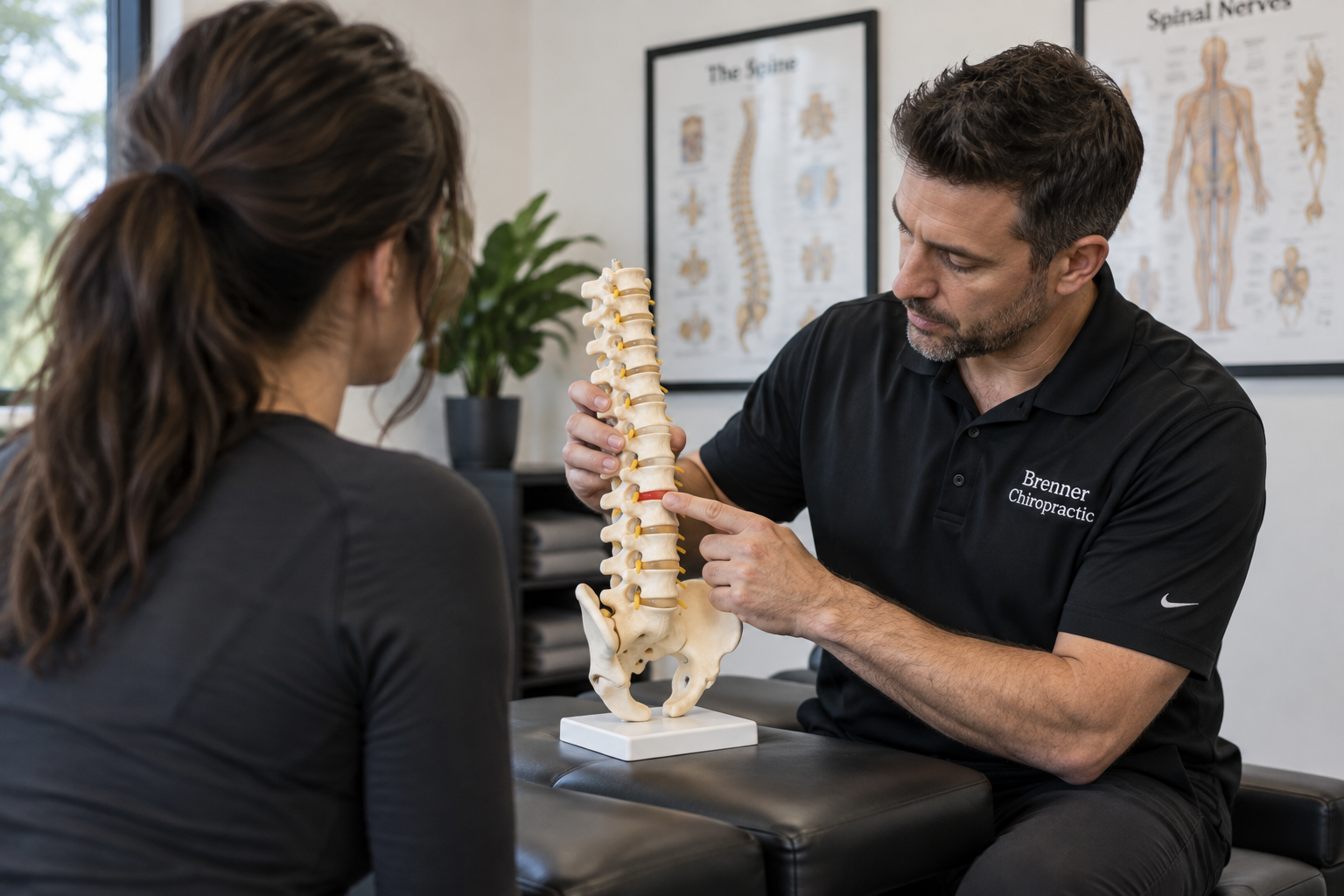
- Step 1 – In-Depth Consultation: Dr. Brenner sits down with you one-on-one to review your health history, daily routines, and the development of your symptoms.
- Step 2 – Functional and Neurological Examination: We evaluate your posture, range of motion, muscle strength, sensory response, and reflexes to identify nerve involvement.
- Step 3 – Determining Appropriate Care Options: Dr. Brenner determines whether conservative care is appropriate for your presentation or whether outside imaging or a medical consultation is needed first.
- Step 4 – Individualized Treatment: If chiropractic care is appropriate, we develop a gentle care plan that combines low-force adjustments, soft-tissue work, and active home guidance.
- Step 5 – Ongoing Progress Monitoring: We continuously re-evaluate your response and adjust treatment procedures as your mobility improves.
How Long Can It Take for a Herniated Disc to Improve?
There is no single recovery timeline when treating a herniated disc. The duration of your recovery will depend on several key factors:
- The location and structural size of the herniation
- Whether nerve root compression is present and how severely
- How long have you had the symptoms before starting care
- Your overall health, daily posture, and consistency with home recommendations
While many individuals notice initial symptom relief within a few weeks of conservative care, inflamed nerve and disc tissue require time to fully recover. If your progress stalls or symptoms worsen over time, care is reassessed to explore alternative options.
FAQs About Herniated Discs and Chiropractic Care
Can a chiropractor fix a herniated disc?
No. A chiropractor cannot physically push or pop a herniated disc back into place. Care focuses instead on easing joint pressure, reducing surrounding inflammation, and restoring comfortable movement.
Can a chiropractor help a herniated disc?
Yes. Conservative chiropractic care can help manage pain, ease muscle guarding, and improve mobility when disc material irritates nearby nerves.
Can a chiropractor make a herniated disc worse?
While mild muscle soreness can happen after care, forceful or improper care on an acutely inflamed disc could aggravate nerve irritation. Careful exams and low-force techniques minimize this risk.
Is it safe to get adjusted with a herniated disc?
Yes, when performed by a licensed professional who appropriately modifies techniques. Gentle, non-force methods are often used to safely decompress the spine.
Do you need an MRI before seeing a chiropractor for a herniated disc?
Not always. An MRI is not automatically required for every patient before beginning gentle conservative care. However, we may recommend one if there are severe neurological signs found during consultation.
Get Help With Back or Neck Pain in Bellmore, NY
Don’t let sciatica, a suspected pinched nerve, or other persistent back or neck pain keep you from living a full life. Getting an accurate, thorough evaluation is the crucial first step toward lasting relief.
At Brenner Chiropractic, we provide personalized, non-invasive care designed to help your body heal naturally. If you are experiencing symptoms related to a herniated disc, explore our lower back and neck pain services, or contact our office today to schedule a consultation right here in Bellmore.